- Home
- Awards
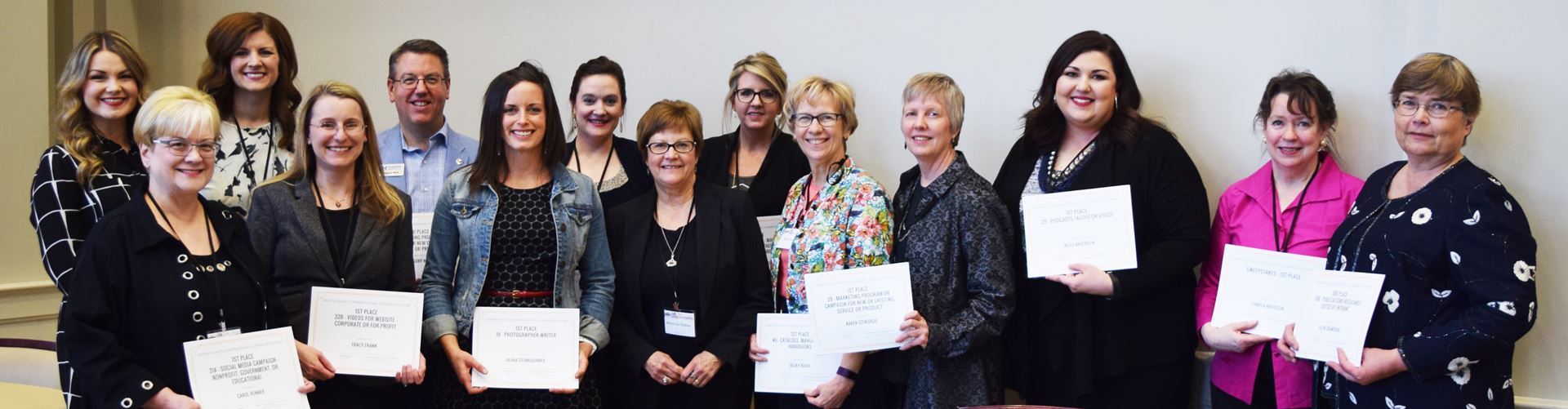
Competition inspires members.
NDPC members are encouraged and rewarded for excellence in communications through state and national communication competitions. Entries are judged by leaders in their fields of expertise. State contest winners are announced at our annual spring conference. First-place winners on the state level go on to complete at the national level. National winners are awarded at the NFPW annual conference in the fall.
Congratulations to winners of the 2026 NDPC Communications ContestWinners of the 2026 NDPC Communications Contest were announced at the April 30 annual conference. Read more>> 2025 National Contest WinnersTwenty NDPC members earned 40 awards for their work in print media, photography, advertising, writing for and development of the web, promotion, public relations, marketing, speeches and books. Read more>> 2025 NDPC Communications Contest WinnersWinners of the 2025 NDPC Communications Contest were announced at the May 9 annual conference. Read more>> | Roxane Salonen named NDPC’s Communicator of Achievement 2026
|
 Roxane Salonen, owner of Beauclair Communications and a columnist for Forum Communications, is NDPC's 2026 communicator of achievement.
 Upcoming events
| Communicator of AchievementEach year North Dakota Professional Communicators honors a member as the communicator of achievement based on the person’s achievement in the communications field and service to NDPC.
|
